That movies get made at all. What other industry has so many diverse moving parts, departments, heads, egos and film stars all working together (or not) to create something that has no guarantee of success. This is list is dedicated to the “or not” aspect of film making. When things go from bad to worse, the luck runs out, and the result is, at best, a turkey.
(CLICK ON TITLES TO FIND OUT WHERE TO WATCH)
10. My Best Fiend
Werner Herzog’s relationship with actor Klaus Kinski laid bare.
You may be surprised that I’ve omitted the documentary surrounding the filming of Fitzcarraldo in either of my lists. A film about a madman who gets natives from the Amazon to transport a steamship through the jungle — all to serve opera up to some unsuspecting tribespeople. The task of making the film seemed no less ambitious, painful, and dangerous.
However, not as painful as deciding to partner up in the latter part of your career and film five movies with one of the most monstrous narcissists ever to work in the film business. The film starts with Kinski at the height of his psychopathy, touring a one-man show where he claims to be the second coming and spends most evenings — it seems — berating and lambasting the audience.
That Herzog entertained this hate-hate relationship is a fascinating insight into his own inverted narcissism — or co-dependency, maybe. Not just spending time with him on film sets, but film sets in the heart of the jungle, where locals — real natives — offer to kill Kinski for Herzog, just to put him and the crew out of their misery.
From the excellent documentary canon of Herzog, one can derive that he is a fascinated man. And it is that fascination with the most “people” of people that motivates his continued masochistic desire to work under the worst circumstances, made worse by the very worst of people.
I start this list with this movie as a warning — a cornfield scarecrow of how narcissism flows through the film business like water through the Amazon River. Monsters are out there, for Kinski is just one of many who are offered safe haven in our industry.
9. Alien: The Stage Show
Whilst not strictly a film about filmmaking, this absolute treasure has to be seen to be believed.
As an antidote to the Herzog film, this represents the other end of the spectrum — when things get a little too softly-softly, feely-feely, or too democratised within the exploits of artistic expression. A true-life story of how an amateur dramatics society appeases an egotistic director-in-residence by agreeing to put on a stage version of the film Alien.
It’s such a preposterous proposition — placing the cast of characters on a journey where the destination can only be failure. You watch this with a kindly “ah bless” point of view, as amateur prop-people struggle to work out how to engineer the chest-burster, how to create a monster suit out of cardboard boxes, and whether anyone will turn up to see it.
An everyman story that somehow celebrates the horror masterpiece by turning it into a fiasco that looked like a great night out — which leads to a last act that will amaze you.
8. Making of The Shining
What??? There’s behind-the-scenes footage of the infamously private, closed-set, director’s-cut-or-bust Kubrick making one of the greatest film adaptations of all time?
Yes — candid, up close, personal, and regrettably short.
However, Kubrick granting his daughter permission to film behind the scenes shows us how he approaches filmmaking. While he may not be working with method actors, he treats them like a method director. One set of rules for Nicholson, another for Shelley Duvall, who is — even in this short documentary, probably from footage gathered on just a single day’s shooting — not going to be let off the hook by Kubrick.
The one takeaway from this short study is how anachronistic Kubrick is when approaching filmmaking. His refusal to work more than commuting distance from his home and his megalomaniacal need to have absolute control over the environment he’s working in is put on display here, when his daughter is taken on a walkabout of the famous Overlook Hotel, revealing a cavernous set built on a soundstage at Elstree Studios — not only encasing the hotel but also a snow-filled maze used for the dramatic final act.
Watching the film again after seeing this footage reveals how many smoke and mirrors are employed just to get Stanley home for tea every night. But if this seems absurd — did you know his epic war classic Full Metal Jacket was all shot in the Docklands in London, complete with handpicked palm trees flown in from Southeast Asia?
But why this list? A film that is a masterpiece? Well because it is an adaptation that the writer Stephen King wholeheartedly rejects. Which begs the question, what qualifies an adaptation as good. Does it stay close to the text, the spirit, the story like say the Lord Of The Rings trilogy. Or does it just serve as a premise from which to build a totally independent work of art. Whilst I am thankful for Kubrick’s efforts, I also love the book. I see them as totally different entities. However I can’t help but feel anyone who had gone to the trouble of writing a book only to have most of it ignored for the screen version that bore both my name and the same name as the book would be somewhat miffed perhaps?
7. For Your Consideration
I have never witnessed two separate viewings of a film where the audience reaction is so different.
To the average viewer: a film about a hapless bunch of no-hopers who are led to believe that their terrible movie is going to clean up at awards season.
To industry folk: a cringe-inducing recognition of that point in any “show” where people’s personal investment, no matter how grudging, gets to a level where everyone falls under a delusional spell that what they’re doing is, in fact, quite good — and may lead to something. In this case, Oscars.
This film does for filmmaking what Spinal Tap does for rock music (and it’s brought to you by many members of the Tap cast).
On the second viewing — in front of an industry crowd — it was like watching Eddie Murphy Raw. Every utterance ushered howls of laughter. The in-jokes and observations come thick and fast, and I can’t help but feel the producers believed they had a hit on their hands.
It wasn’t to be. The in-jokes are probably a little too in, and the film didn’t enjoy the same success — cult or otherwise — as Spinal Tap, Best in Show, or A Mighty Wind.
Still, it’s a great film for tempering hope and reminding us of that point in every production when we somehow feel the project that put us in the doldrums may, in fact, be the one that gets us out of it.
6. The Disaster Artist
I feel this film is underrated in its tonal success.
The director is tasked with a dramatic recreation of how what is commonly regarded as the worst film of all time came to be. At every step, they must have thought: “You couldn’t write this shit.”
It’s an extraordinary tale told (as the end credits attest) where you will watch with your mouth agape — but never laughing at the delusion that prevails — and it somehow leaves you caring about the outcome.
The central figure of this affectionate depiction is James Franco playing Tommy Wiseau (née Wieczorkiewicz) — an enigmatic Martin Guerre-type character who displays symptoms often found in people who’ve suffered brain injuries and start speaking in a totally incomprehensible foreign accent.
No one knows where he came from, or how he’s financing the mother of all ego-projects — a film where he appears in every frame (often having passionate sex), speaking prose that seems to have been tongued out of a freshly tossed salad bowl.
Bring your spoons.
5. Lost in La Mancha
Unlike Tommy Wiseau in The Room, Terry Gilliam has form.
This film, an intimate fly-on-the-wall depiction of the slow car crash that is his failed attempt at making his take on Don Quixote, is a different flavour of delusion. One gets the sense that his triumphant CV is the result of somehow repeatedly pulling success from the jaws of defeat.
It becomes clear from this documentary that it is not Terry Gilliam rescuing his previous projects, but rather a team of dedicated and loyal professionals who manage to work within the chaos of Gilliam’s flow-state style of directing — delivering him just enough footage that can be cut into something presentable in post.
A telling moment: Gilliam seems completely surprised to hear that the wheels have totally come off the production — as if to say, “I thought it was going fine; it’s always like this on my movies.”
A fascinating peek into genius at work — when genius proves not to be enough, and when relying on luck to carry ambition becomes one gamble too far.
4. American Movie
Unlike The Disaster Artist, which suggests — without being explicit — that there’s probably a degree of mental illness at the heart of that debacle, American Movie is a true-life documentary that will have you laughing openly at the delusional director centre frame.
No affection is afforded him — because he affords it to no one else.
His repeated acts of self-sabotage will make you question whether he is truly interested in making a film, or whether directing is simply his chosen route to elevate himself above his peers and control people.
While there are moments when you fall into his pathology and think “he may just pull it off,” you ultimately want the absolute worst for him, as he is completely undeserving of the dedication his peers offer. Particularly his hapless, alcoholic friend, who never turns up ANYWHERE without a clutch of tinnies in tow.
And the result? Satisfyingly much, much worse than you could possibly imagine.
Proof, indeed, that it takes more than just being a dick to be an effective director.
3. Alien 3 – Making Of
In counterpoint to American Movie, here you lament the deck of cards that director David Fincher was dealt.
On paper — before the bean-counters had their way — this movie was set to be an extraordinary companion to Alien and Aliens. A monastery planet made entirely of wood, where the atmosphere is so low they’ve had to build wooden mines deep into the core.
Watching it with the knowledge of what Fincher went on to achieve is a constant reassurance: he was young, inexperienced, and handling unreasonable expectations from studio bosses who didn’t offer him the artistic freedom he needed to realise those expectations.
There are flashes of genius in this deeply flawed film, and the documentary explains them all — likely leaving you with a lingering “if only…”
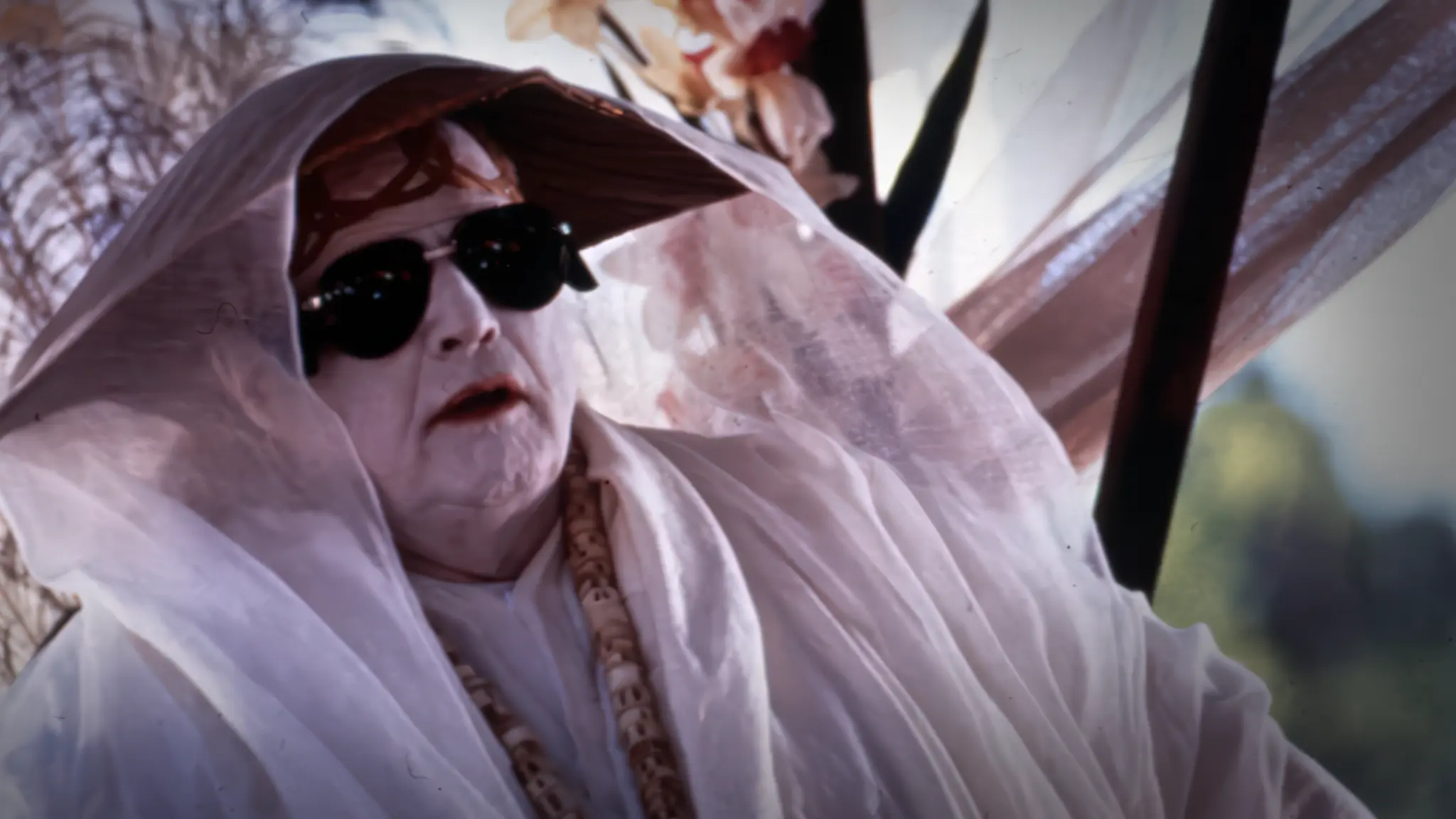
2. Lost Soul: The Doomed Journey of Richard Stanley’s Island of Dr. Moreau
The film got finished. It’s out there. How, beggars belief.
This isn’t a car crash of a movie — it’s a multiple-lane highway pile-up.
At the heart of it is troubled genius Richard Stanley, who demonstrates with great efficacy that the components that go into making a successful director are multidimensional:
Leadership, delegation, collaboration with subordinates — and knowing how to be one.
AND, if you had the poor fortune… the ability to work with, and get anything useful out of, Marlon Brando — who appears, within this account, to be trolling the entire crew for the entire duration of the shoot.
It’s a film that defies logic. The fact that anything resembling a finished product exists at the end is a minor miracle — like snatching a single, pathetic victory morsel from the roaring jaws of total catastrophe.
1. Overnight
This is by far my favourite film about — maybe not filmmaking, because this is ABSOLUTELY how not to do it — but rather a filmmaker who is handed a golden Wonka-ticket of an opportunity and fucks it royally, on camera, for us all to enjoy.
Because this guy… well, he is a total cunt.
A despicable, narcissistic fantasist who has his condition enabled on a grand scale by the Weinstein brothers. Desperate for a follow-up to the insane success of Pulp Fiction (budget $8m, box office $250m), the Weinsteins try to track down their next Quentin.
Enter Troy Duffy — a beer-drinking, chain-smoking doorman at a bar, with a rock band he fronts and a script he’s written.
He’s offered overnight hero status:
-
A $1m development fund to direct his debut Boondock Saints
-
An instant record contract with Madonna’s Maverick label for his band to score it
It made great industry press — but does not a good director make.
I won’t spoil it further, because it’s a sheer voyeuristic joyride of schadenfreude. But kudos in particular to the two guys on the receiving end of his wrath — the camera crew he hired but refused to pay, to document his success.
Respect to them for keeping the cameras rolling despite the abuse — because they knew they had something that was going to be valuable.
The best documentary about a film going tits-up ever made.
Trigger warning:
Billy Connolly fans may want to steer clear of this one. It sheds a surprising light on the Glaswegian in a way that may make you think less of him.