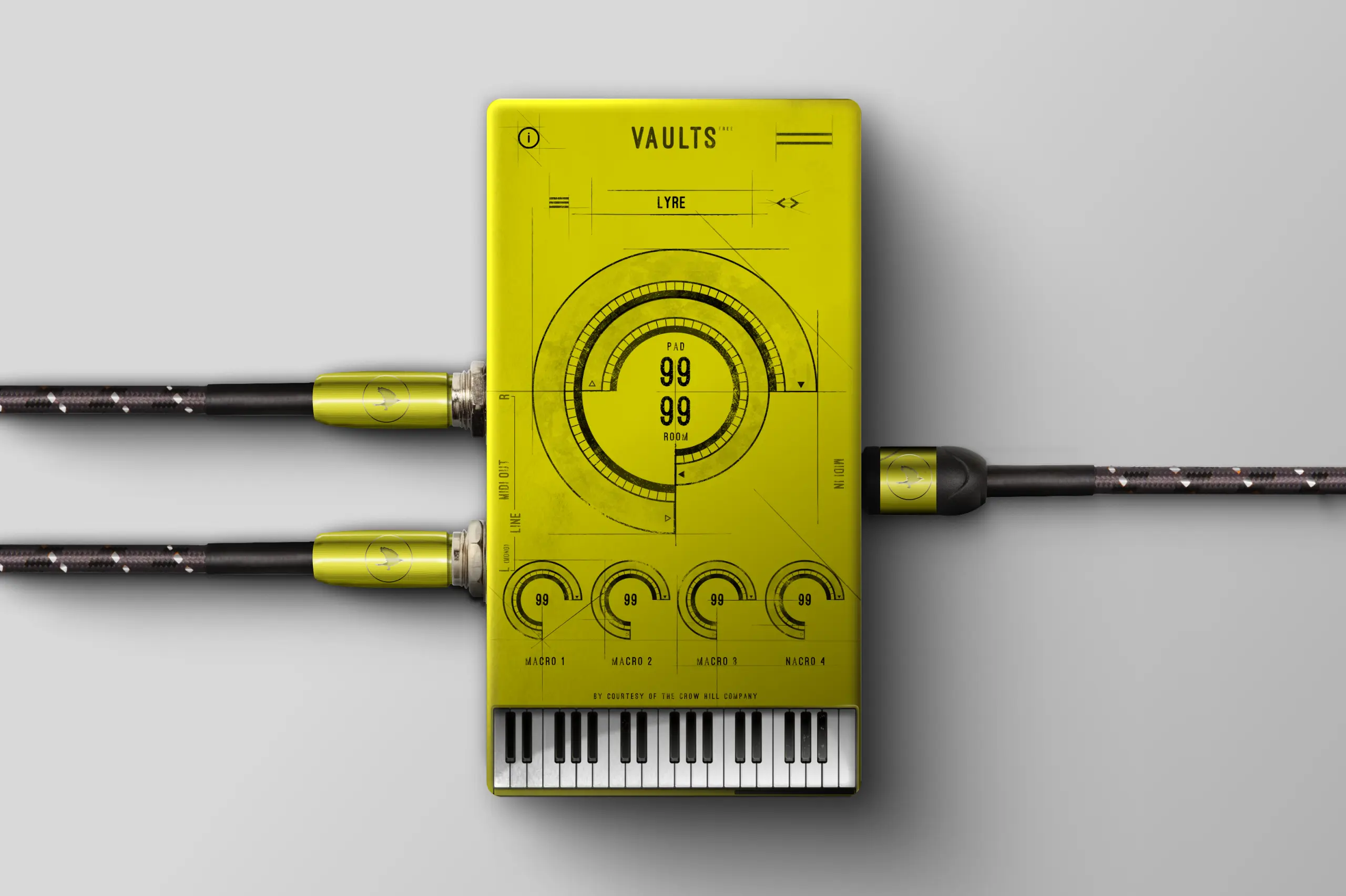
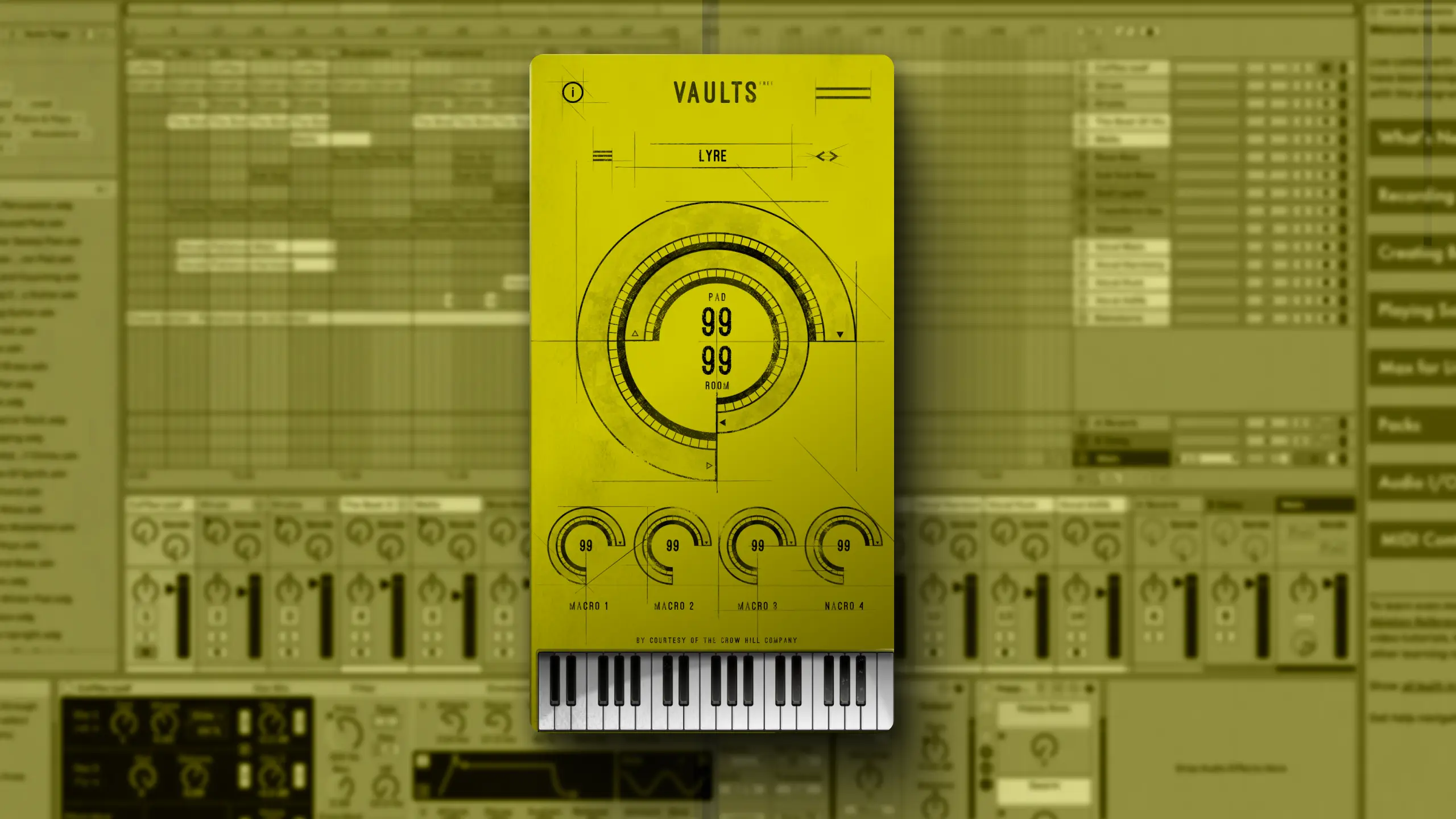
A good quality instrument will always reward you when playing, performing and recording music. However, this doesn’t always apply when sampling. The magic zone for life-like beguiling sounds is often to be found in the quieter dynamics. Which, in the case of an instrument like this, it not having very good resonating qualities and a brittle-nature to it’s reaction to being plucked into a vibrating state from an inert one had the label “this will sound great sampled”. Recorded at Castesound studios, Edinburgh the Vaults Lyre features round robins, dynamic layers going from super brushed fingertips to aggressively plucked Koto-like tones. In addition to this the main large knob can be used to dial-in a one-of-a-kind random tremolando that can be used to increase tension, sustain a short-lived plucked tone. Or with the addition of delays and reverb a haze of ambient texture. Talking of delays and reverb, we have organised 4 effects macros to bring your Lyre to life using a combination of polyrhythmic delays and a sumptuous reverb. All to you for free, forever, to use on whatever you like.
An instrument so ancient its invention is shrouded in myth. Legend has it that the Greek god Hermes created the lyre from a tortoise shell, gut, and reeds to help him steal 50 prize cattle from Apollo’s sacred herd. The earliest found examples date from c. 2700 BC.
In many ways the instrument provided the earliest form of underscore. Before the days of orchestral films scores or even cinema pianists and organists, bards and storytellers in ancient Greece, Celtic Europe, and Germanic or Norse traditions used lyres to add emotion and atmosphere to their tales.
This ancient tradition has come full circle with Ludwig Goransson’s liberal use of the lyre in his score for the recent film adaptation of Homer’s Greek epic ‘The Odyssey.’