There are many misconceptions about the BBC. Least that it is merely our (the UK that is) our state broadcaster. It is not only NOT merely that, it isn’t that at all! The BBC is a private corporation that acts under a royal charter that offers it certain privelidges but also an amazing set of restrictive constrictions that make it a truly unique entity unknown anywhere else on the planet. It’s privelidges are numerous, most crucially to add an annual levy on any household in the UK that owns a television. Or now, more specifically any device that is capable of viewing television programmes on. Whether those be from the BBC or any other. It has access to a large swathe of the broadcasting spectrum from which it delivers the UK 2 “terrestrial” TV channels 6 National radio channels and countless local radio stations. It has legal rights to certain sporting events and gets to produce live coverage of state events that all other broadcasters have to tap in on. But it does way more than that. It broadcasts radio around the world. Pipes television news across the net. Supports a dozen or so world-class orchestras from symphony sized, chamber, studio and ‘concert’. It puts on arts festivals across Britain, not least the annual Proms which is the largest classical festival in the world alongside being the most diverse and accessible. But also it is the producer of some of the most successful factual content in the history of television from the seminal work of programmes helmed by Sir David Attenborough, to the historical masterpiece that is The World At War, to the petrol headed and some would say puerile Top Gear. It’s drama and comedy is also sold across the planet and it is the BBC that gave us Monty Python, Fawlty Towers, and The Office.
It has (although this is very much under threat) been a university-like centre of reserch into transmission and communications with many revolutionary technologies being developed by the BBC alongside uncubating a steady stream of technical talent that has travelled the world, collected Oscars and Globes, and BAFTAS by the bucket load. And is very much the reason why film makers come to us to shoot Hollywodd blockbusters like the Star Wars, Alien and Harry Potter Series…. Oh and there’s this guy called Bond too.
It’s origins will however surprise many. It wasn’t set up by a government agency, nor a publishing mogul. It wasn’t a bunch of actors, or directors or writers who got together to “make stuff”. It was in fact a group of technology companies who were making stuff that recorded, and reproduced, and transmitted. The only problem was they needed what we now call “content” in order to provide any commercial value to what they were innovating and indeed motivation to continue doing so. So a group of telecommunications companies, mircophone makers, amplifier and speaker manufacturers and not least the people who made the “receivers”; radios and a decade or so later television sets. Got together to make the stuff.
Having the royal charter means it’s output is not self-determined, or indeed commercially (the BBC is not allowed to use advertising revenue from stuff it transmits in the UK) but indeed a board of governers not salaried by the BBC. It is this constriction that has always held the BBC to account, whether that be it having to provide a non-political bias, be a beacon of excellence. But also offer a fair and equal return to a populace that subsidises it. This means it’s content is broad and caters to all tastes and backgrounds. BUT more importantly that it offer opportunities across the UK to welcome and nurture talent and expertise from all walks of life and all corners of the UK.
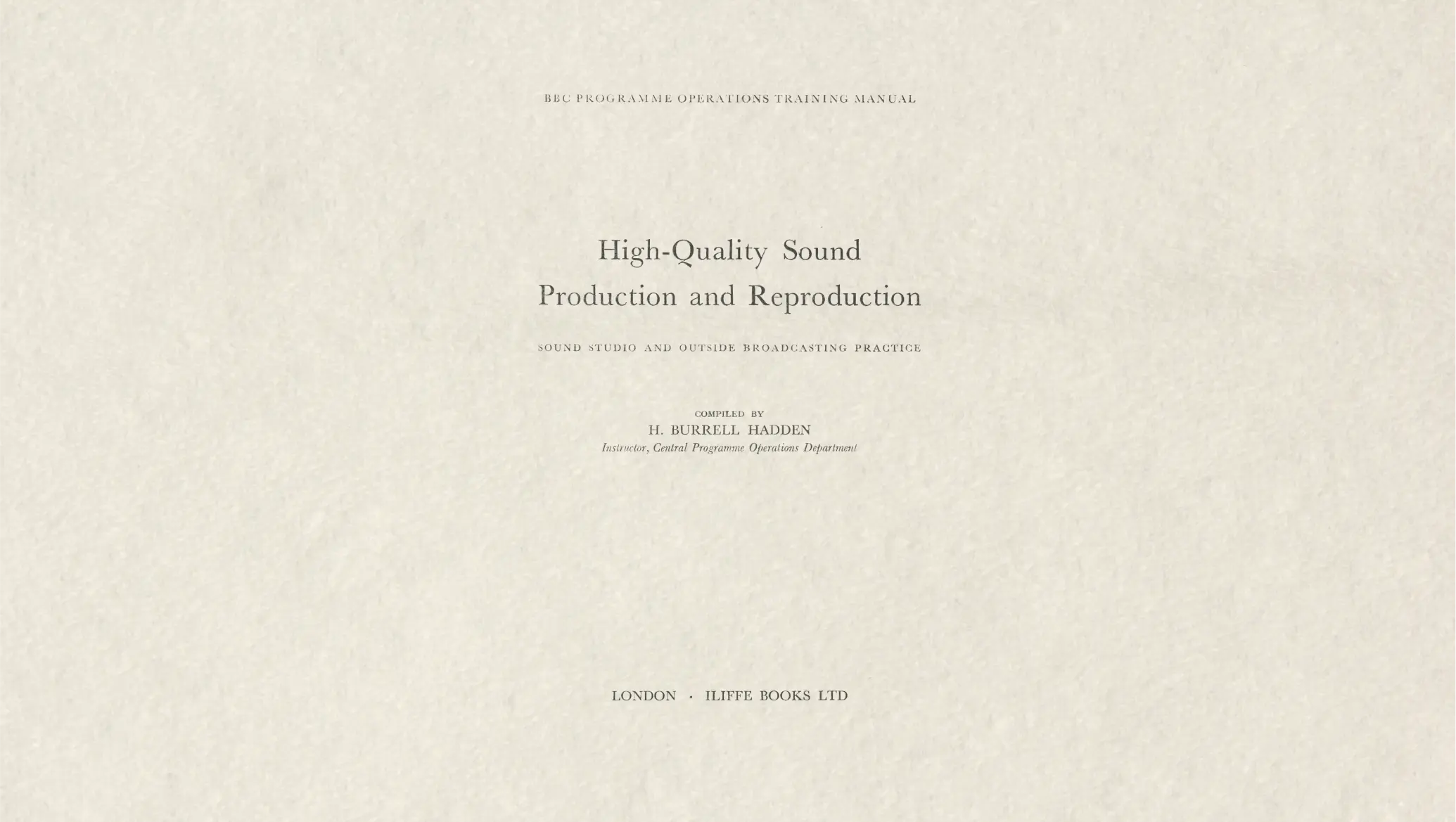
In order to do this the BBC has a long history of apprenticships and salaried support for people to become world-leading technicians. Which is what leads us to this book. One of the most brilliantly written books designed to guide junior technicians through the theory of sound and sound recording. Whilst the language may feel old fashioned and the pictures seem beautifully dated. The principals of sound and sound recording do not change. I feel this is a truly brilliant must-read for anyone who feels they may have some holes in their engineering chops or basic understanding of what it is we’re doing.
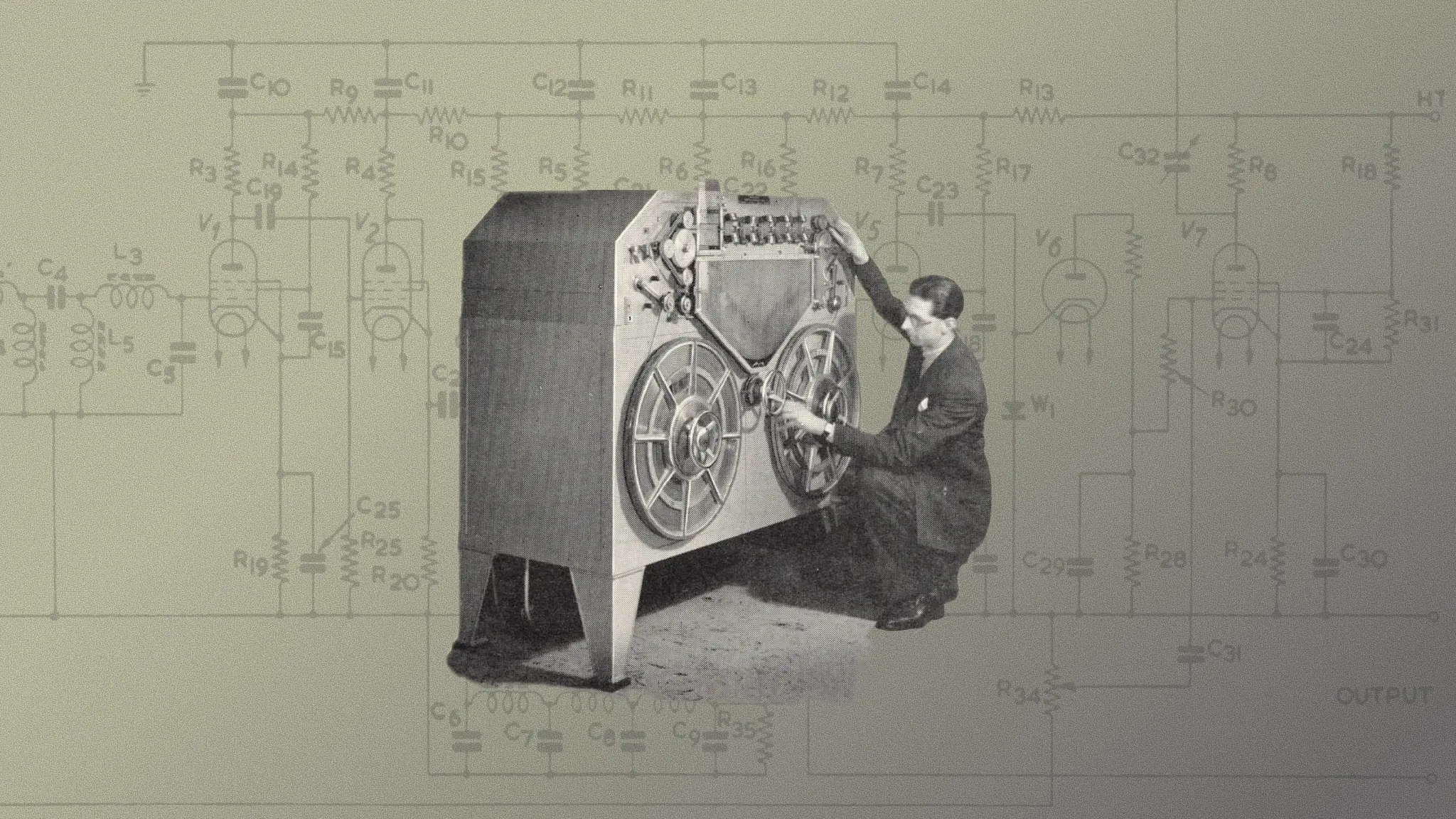
I’ve curated some of my favourite plates from the book to also show off what I think are some beautiful pieces of kit that proves to me that a stunningly designed bit of gear is not designed but is well engineered. Something that works with our human form factor, should be cherished and respected and intuitive to use. But also built to last and work in numerous environments and media. You will see stuff that is long forgotten, and be amazed to see technology that is as popular today as it was way back when. I am also heartened that a book of this era features so many pictures of women who, during this time would seldom be found in engineering positions of this type anywhere in the world outside the doors of the BBC.
This book is out of print now but available from second hand stores (abebooks.com is a great place to access a worldwide database catalogued by books sellers) and in various .pdf forms across many different sites. The plates in the rotator below are from scans we made in-house from our copy.
Download and enjoy HERE and join the conversation about it HERE.